
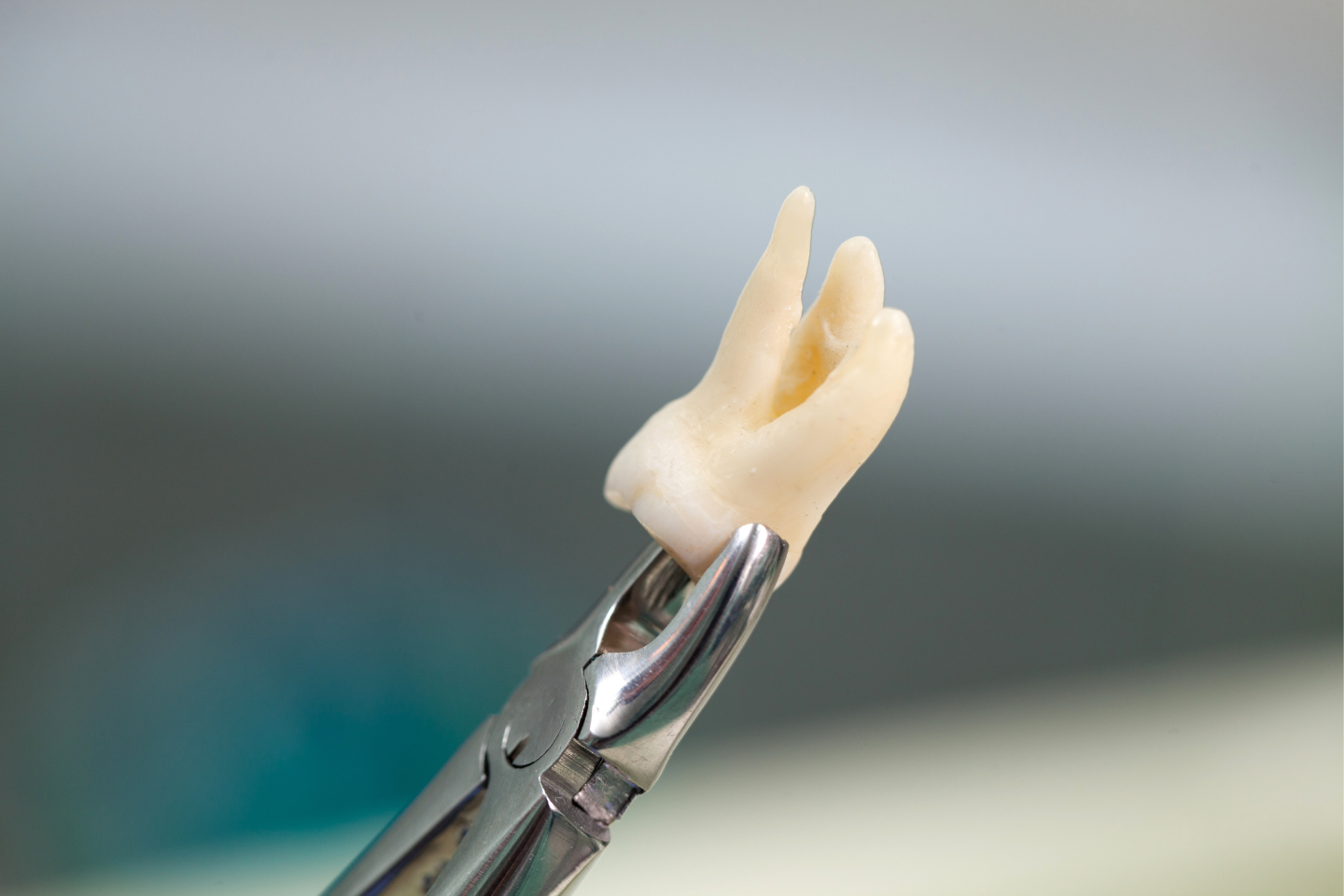
At Great Florida Smiles & Orthodontics, the primary goal is always to preserve your natural teeth whenever possible. Modern dentistry offers incredible tools like root canals, crowns, and deep cleanings to save teeth that are damaged or diseased. However, there are specific circumstances where keeping a tooth does more harm than good to your overall oral health.
In these cases, a tooth extraction becomes the most responsible and effective treatment. Understanding why an extraction might be necessary and recognizing the warning signs can help you take action before a small problem turns into a dental emergency.
Common Reasons for Tooth Extraction
An extraction is never the first choice, but it is a vital tool for protecting the rest of your smile. Here are the most frequent reasons why a tooth may need to be removed.
1. Severe Decay or Damage
When a cavity is left untreated for too long, it can consume so much of the tooth structure that there is not enough healthy enamel left to support a filling or a crown. Similarly, if a tooth is fractured deep below the gum line or into the root, it may be impossible to repair.
2. Advanced Periodontal (Gum) Disease
Gum disease is an infection of the tissues and bones that support your teeth. In its advanced stage, known as periodontitis, the infection destroys the bone and ligaments holding the tooth in place. When a tooth loses its foundational support and becomes loose, extraction is often the only way to stop the spread of infection.
3. Overcrowding and Orthodontic Prep
Sometimes, a mouth is simply too small to accommodate all the teeth in a straight, healthy alignment. In preparation for braces or Invisalign, an extraction might be necessary to create the space required for other teeth to move into their correct positions.
4. Impacted Wisdom Teeth
Wisdom teeth, or third molars, often do not have enough room to emerge properly. They can become impacted, meaning they are stuck under the gums or growing at an angle. This can cause pain, cysts, and damage to the neighboring healthy molars.
5. Risk of Infection
For patients with weakened immune systems, even the risk of an infection in a single tooth is enough to justify removing it. In these cases, the priority is preventing a localized dental issue from becoming a systemic health threat.
Warning Signs You Should See a Dentist
Your body has a way of telling you when a tooth is in serious trouble. If you experience any of the following symptoms, it is time to schedule an evaluation at Great Florida Smiles & Orthodontics.
- Persistent, Throbbing Pain: Pain that keeps you up at night or does not respond to over-the-counter medication is often a sign of a deep infection or a dying nerve.
- Severe Sensitivity to Pressure: If you cannot bite down or put any pressure on a specific tooth without sharp pain, the root or the surrounding bone may be compromised.
- Swollen or Bleeding Gums: Localized swelling that looks like a small pimple on the gums, known as an abscess, may indicate an infection that requires extraction.
- A Loose Tooth: Adult teeth should never feel loose. Mobility is a major red flag for bone loss or trauma.
- Jaw Stiffness or Swelling: If you feel pressure at the back of your jaw or have difficulty opening your mouth, your wisdom teeth may be impacted and pressing against your nerves.
What to Expect During the Procedure?
Many patients feel anxious about the idea of an extraction, but modern techniques and anesthesia make the process much smoother than most expect.
- The Exam: Using digital X-rays, the team at Great Florida Smiles & Orthodontics will assess the position of the tooth and its roots to plan the most efficient removal.
- Numbing the Area: Local anesthesia is used to completely numb the tooth, jawbone, and surrounding gums. You may feel some pressure during the procedure, but you should not feel pain.
- The Extraction: For a simple extraction, the tooth is gently loosened and removed. If the tooth is impacted, a surgical extraction may be required, which involves a small incision in the gum.
- Closing the Space: In some cases, a few stitches are placed to help the area heal.
Life After Extraction: Replacement Options
Removing a tooth is only the first step. To prevent your other teeth from shifting and to maintain your jawbone density, it is important to discuss replacement options.
- Dental Implants: These are the gold standard for replacement. A titanium post acts as a new root, topped with a custom crown that looks and feels like a natural tooth.
- Bridges: A bridge uses the healthy teeth on either side of the gap to support a realistic-looking prosthetic tooth.
- Partial Dentures: For those missing multiple teeth, a removable partial can restore function and aesthetics.
Frequently Asked Questions
Q: Is a tooth extraction painful?
A: With the use of modern numbing agents, you should only feel pressure during the procedure itself. Any post-operative discomfort can typically be managed with prescribed or over-the-counter pain relief and usually subsides within a few days.
Q: How long does it take to heal?
A: The initial healing phase takes about one to two weeks. During this time, a blood clot forms in the socket to protect the bone. It is crucial to follow aftercare instructions carefully to avoid a dry socket, which occurs if the clot is dislodged.
Q: Can I drive myself home after an extraction?
A: If you only receive local anesthesia, you are usually fine to drive. However, if you opt for stronger sedation to manage anxiety, you will need a friend or family member to take you home.
Q: What can I eat after having a tooth pulled?
A: Stick to soft foods for the first 24 to 48 hours. Yogurt, applesauce, mashed potatoes, and lukewarm soups are excellent choices. Avoid using straws, as the suction can dislodge the healing blood clot.
Visit Great Florida Smiles & Orthodontics
If you are dealing with a toothache that will not go away or a tooth that feels unstable, do not wait for the problem to get worse. Early intervention can sometimes save a tooth that might otherwise need extraction.
At Great Florida Smiles & Orthodontics, our team provides compassionate, expert care to ensure your experience is as comfortable as possible. We prioritize your long-term health and will walk you through every step of the process, from the initial exam to choosing the right replacement option.
Contact us today to schedule your consultation and take the first step toward a pain-free smile.
